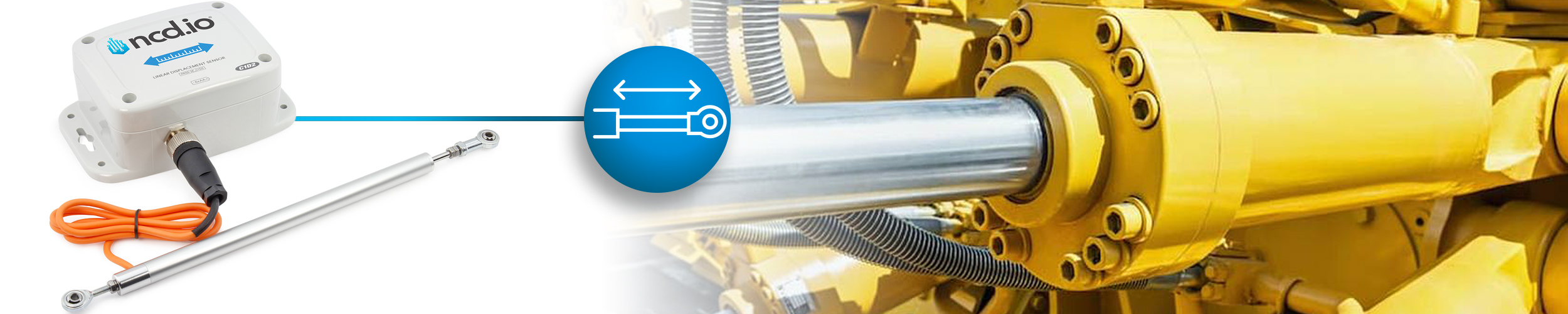
Device Overview
Linear displacement sensors are typically used for structural monitoring applications, allowing movement and shift detection between two points. Install this linear displacement sensor between footings and walls, or between walls and steel support structures. Any movement (due to temperature, earthquakes, or structural failure) will be reported by this sensor. Use this linear displacement sensor for measurement of distances between two points, such as positional control systems, lifting and spreader beam testing, hydraulic movement detection, and structural crack monitoring. With pivot bearings included at each end, this sensor is capable of monitoring shifts in position that may not always be perfectly linear without damage to the sensor. With a IP65 rating, this device is ideally suited for indoor or outdoor use.
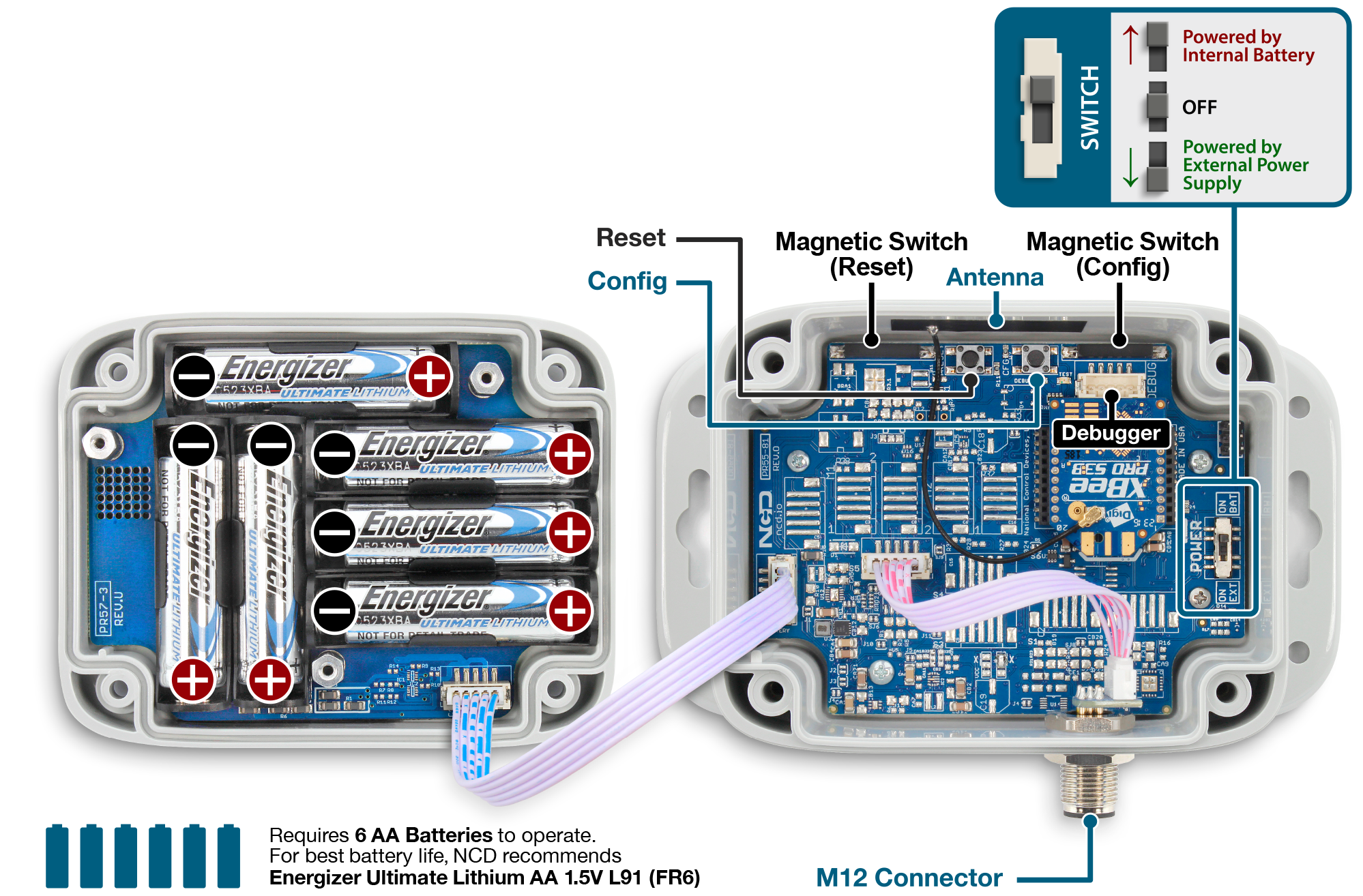
This long range IoT wireless Linear Displacement Sensor incorporates a 1 channel 10-bit ADC that samples Linear Displacement at user defined intervals and sends a wireless transmission to remote gateways and modems. After sampling, this device goes to sleep to minimize power consumption and prolong battery life. This IoT Wireless Linear Displacement Sensor has an additional feature of detecting change in position every 7 seconds (user configurable) and sending out Displacement value if the change in Displacement is greater than 10% (user configurable). To minimize power consumption, it sleeps during the time it is not checking for change in Displacement level. Both of these features work together, supporting multiple application areas in one package. This Wireless IoT Linear Displacement Sensor outputs a analog value. The value range is between 0 and 1023. An output value 1023 indicates that the displacement probe is fully extended while a value of 0 indicates the sensor is fully contracted.
- Wireless Linear Displacement Sensor for Structural Monitoring
- Industrial Grade IoT Displacement Sensor with Max Speed 5m/Sec
- 10-bit Resolution & Linear Precision 2% FS
- Auto ADC Sample Transmission on Level Change
- Configurable 10% Analog Voltage Change Detection
- 2 Mile Line-of-Sight Range with On-Board Antenna
- NCD provides a compete set of Node-RED libraries
- Wireless Mesh Networking using DigiMesh®
- Open Communication Protocol for Easy Software Integration
- Includes Battery Level with Every Transmission
- Validates and Retries Lost Communication Packets
Wireless Technology
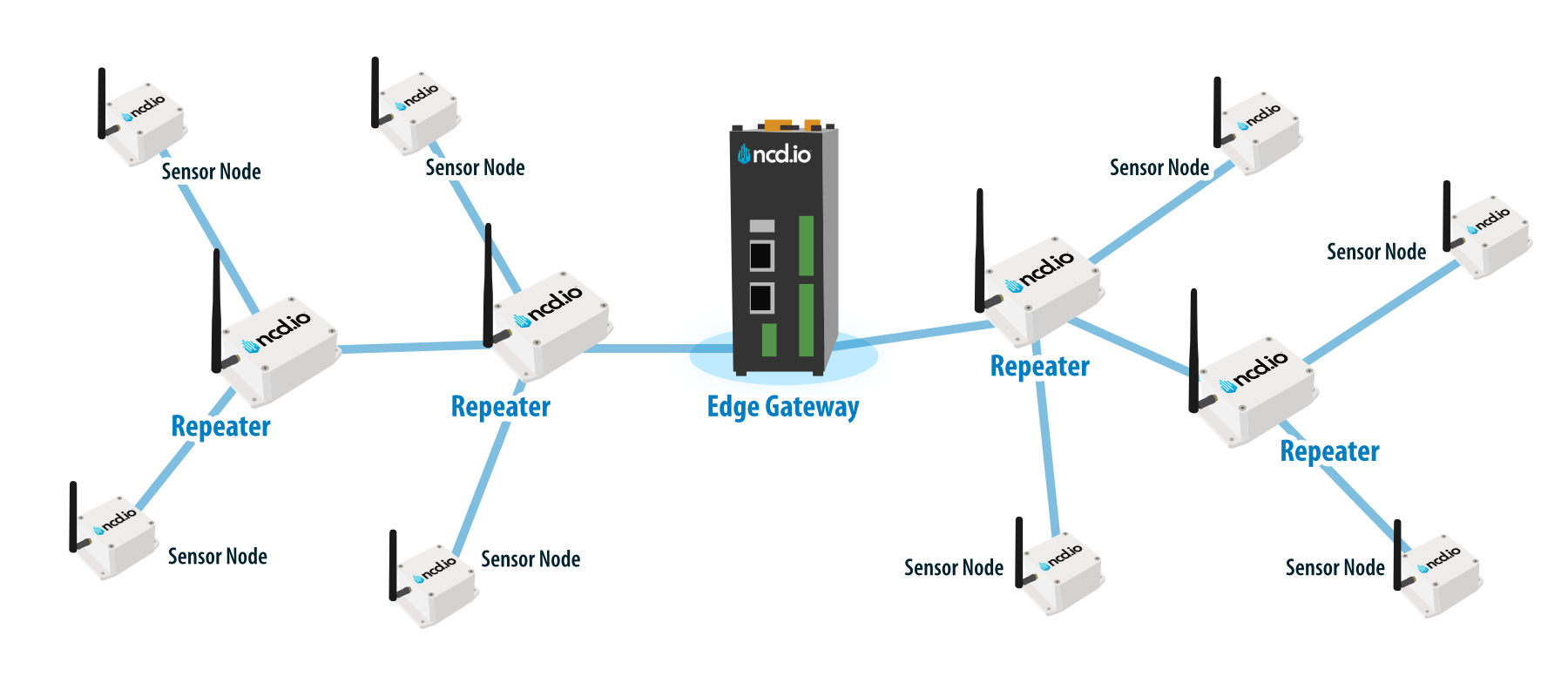
The NCD Industrial range of sensors utilizes DigiMesh, a proprietary networking technology designed by Digi® International. It is especially suitable for IIoT applications as it provides a number of benefits over conventional wireless stacks:
- Long range – up to 1200 feet in urban environments and 2 miles+ in open areas with the included antennas
- Mesh networking topology – no single point of failure, self healing network with high redundancy.
- Long battery life due to low power consumption – up to 10 years
- Simplified provisioning – extending the mesh network via repeater at no additional configuration complexity
- Works in the 868MHz, 900MHz and 2.4GHz bands – worldwide region interoperability.
If you want to learn more about DigiMesh and how it compares with another popular IoT stack (LoRaWAN) head to the article below:
IoT Wireless Sensor Networks: Digi®Mesh vs LoRaWAN®
Battery Life
| Specifications | Minimum | Nominal | Maximum | Notes |
|---|---|---|---|---|
| Batteries | 2 | 6 | 6 | May be Powered by 2 or 6 AA Batteries |
| Battery Life 1 TPD (TPD Transmissions per Day) | 10 Years | Battery estimation is based on a 30 min interval | ||
| Battery Life 12 TPD (TPD Transmissions per Day) | 8 Years | Battery estimation is based on a 30 min interval | ||
| Battery Life 24 TPD (TPD Transmissions per Day) | 5 Year | Battery estimation is based on a 30 min interval | ||
| Battery Life 96 TPD (TPD Transmissions per Day) | 3 Year | Battery estimation is based on a 30 min interval |
The Truth About Battery Life
Under the best of circumstances, the best non-rechargeable batteries commonly available today are limited to a 10 year non-working shelf life in a room temperature environment. Factors such as actual usage, temperature, and humidity will impact the working life. Be wary of any battery claims in excess of 10 years, as this would only apply to the most exotic and expensive batteries that are not commonly available. Also note that most battery chemistries are not rated for use in extreme temperatures. NCD only uses the best Non-Rechargeable Lithium batteries available today, which are also rated for use in extreme temperatures and have been tested by our customers in light radioactive environments. Lithium batteries offer a 10 year maximum expected shelf life due to limitations of battery technology. NCD will never rate sensor life beyond the rated shelf life of the best batteries available today, which is currently 10 years.
Applications & Use-cases
Linear displacement sensors are typically used for structural monitoring applications, allowing movement and shift detection between two points. More specifically the NCD C1D2 Industrial IoT Wireless Linear Displacement Sensor is particularly suitable for the following.
C1D2 Industrial IoT Wireless Linear Displacement Sensor Applications
Hazardous-Area Structural Shift Monitoring
In Class I, Division 2 (C1D2) facilities like chemical plants and refineries, small shifts between footings, walls, and steel supports can signal developing structural issues. This sensor can help track linear movement between two points and automatically report meaningful changes over a long-range wireless mesh network—without running new signal wiring through a classified area.
Tank Farm Foundation Settlement and Pipe-Rack Movement
In C1D2 tank farms and containment areas, settling pads, expanding joints, and shifting supports can stress piping, pumps, and valves over time. This sensor can help trend displacement across critical interfaces (pad-to-wall, wall-to-beam, beam-to-support) so maintenance teams can identify gradual drift early and prioritize inspections before misalignment becomes a reliability or safety problem.
C1D2 Lifting, Hoist, and Spreader Beam Testing
In hazardous loading and handling zones, verifying deflection during lifts helps protect equipment and reduce risk when working around flammable vapors. This sensor can help measure displacement during lift tests and transmit results at user-defined intervals (or when change thresholds are exceeded), making it easier to document load tests without tethered instrumentation.
Hydraulic Stroke and Actuator Movement Verification in Classified Areas
In C1D2 process equipment, hydraulic cylinders and actuators can drift, bind, or wear in ways that are hard to spot until performance degrades. This sensor can help confirm actuator travel and detect unexpected movement by sampling displacement and reporting changes (including rapid event-driven updates), supporting predictive maintenance and process consistency.
C1D2 Industrial IoT Wireless Linear Displacement Sensor Use-cases
Pump Skid Alignment Drift in a Refinery Unit
In a Class I, Division 2 pump room, the sensor can be mounted between a pump skid and a fixed structural member to monitor slow alignment drift caused by temperature cycling and vibration. This data can be used to alert maintenance when displacement trends exceed a defined threshold and to correlate movement events with operating conditions before seal wear or coupling issues escalate.
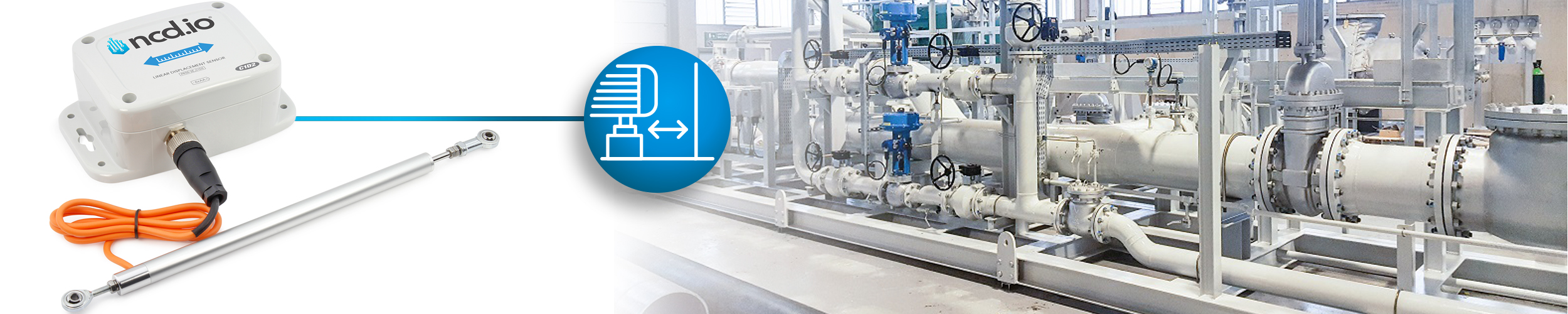
Loading Rack Mechanical Position Confirmation (Event-Based Reporting)
At a C1D2 loading rack, the sensor can be installed to measure the travel of a mechanical stop, gate, or arm where position matters during transfer operations. This data can be used to trigger notifications when position changes by more than a configured amount (reducing “always-on” polling) and to create a time-stamped record of movement events during each loading cycle.
Structural Crack Progression Trending in a Classified Building Area
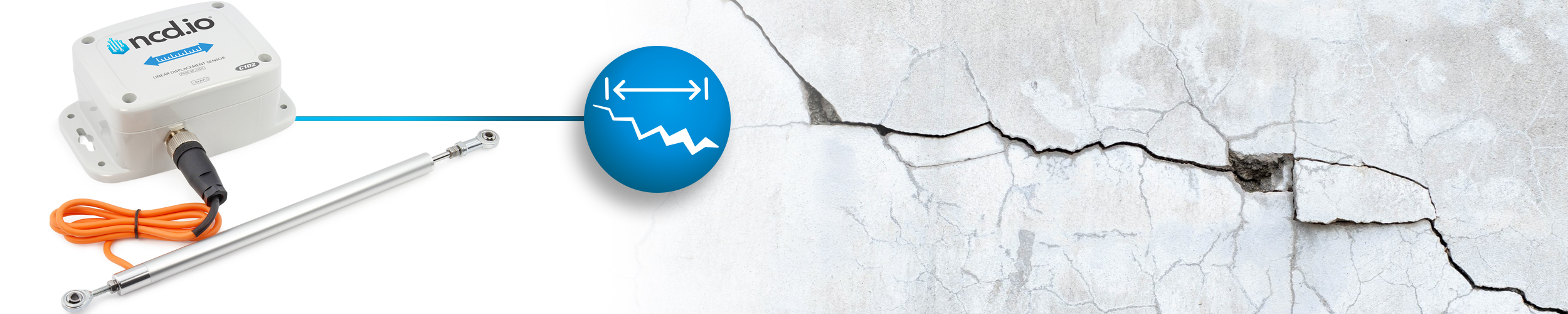
In a hazardous-area building or enclosure, the sensor can be mounted across a known crack or joint to quantify how the gap changes over weeks and months. This data can be used to distinguish harmless thermal expansion from progressive movement that warrants engineering review, while keeping the installation simple with pivot bearings that tolerate slight non-linear shifts.
Hydraulic Equipment Travel “Out-of-Range” Detection
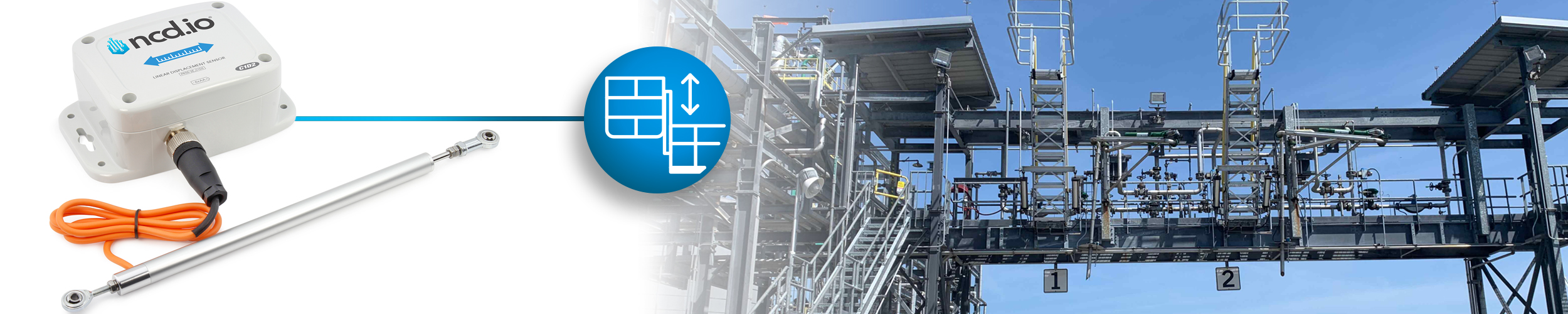
In a C1D2 zone where a hydraulic mechanism must stay within a safe operating window, the sensor can be used to monitor stroke limits and detect abnormal travel patterns. This data can be used to flag over-travel, incomplete travel, or unexpected motion events and to support root-cause analysis by reviewing displacement trends alongside operating timelines.