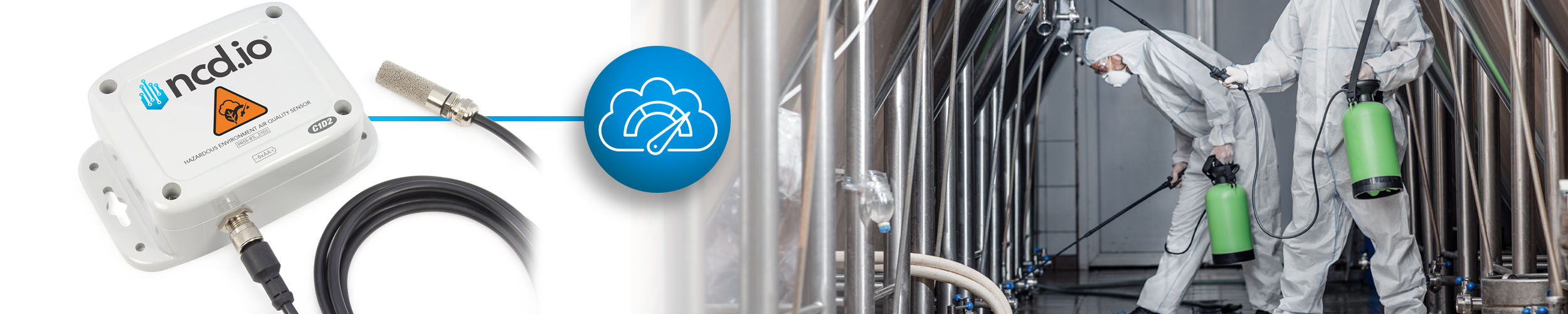
Device Overview
NCD’s C1D2 certified long-range wireless sensor is engineered for comprehensive environmental monitoring, designed for hazardous environments. This advanced sensor measures temperature, humidity, pressure, air quality (IAQ), volatile organic compounds (VOC), and CO2 equivalent levels, making it an ideal solution for industrial, chemical, and explosive risk environments.
Certified under C1D2 Group A, B, C, and D, this sensor is suitable for use in areas where potentially explosive gases, dust, fibers, or flammable vapors are present, such as acetylene, hydrogen, gasoline, and propane. Industries such as oil and gas refineries, chemical plants, and mills can greatly benefit from its precise data collection and reliability.
- Long Range Industrial Wireless IoT Remote Temperature Humidity Sensor
- Industrial Grade with a Sensor Resolution of ±2%RH ±0.2°C
- Sensor Probe Operating Temperature Range: -40 to +125ºC
- Sensor Probe Operating Humidity Rating up to 90% Humidity
- CPU/Wireless module housing(box) Operating Temperature Range: -40 to +60ºC
- Wall-Mounted or Magnet Mounted IP65 Rated Enclosure
- Up to 2 Mile Line-of-Sight Range with On-Board Integrated Antenna
- For Use with Node-Red and NCD Industrial Gateways
- Wireless Mesh Networking using DigiMesh®
- Open Communication Protocol for Easy Software Integration
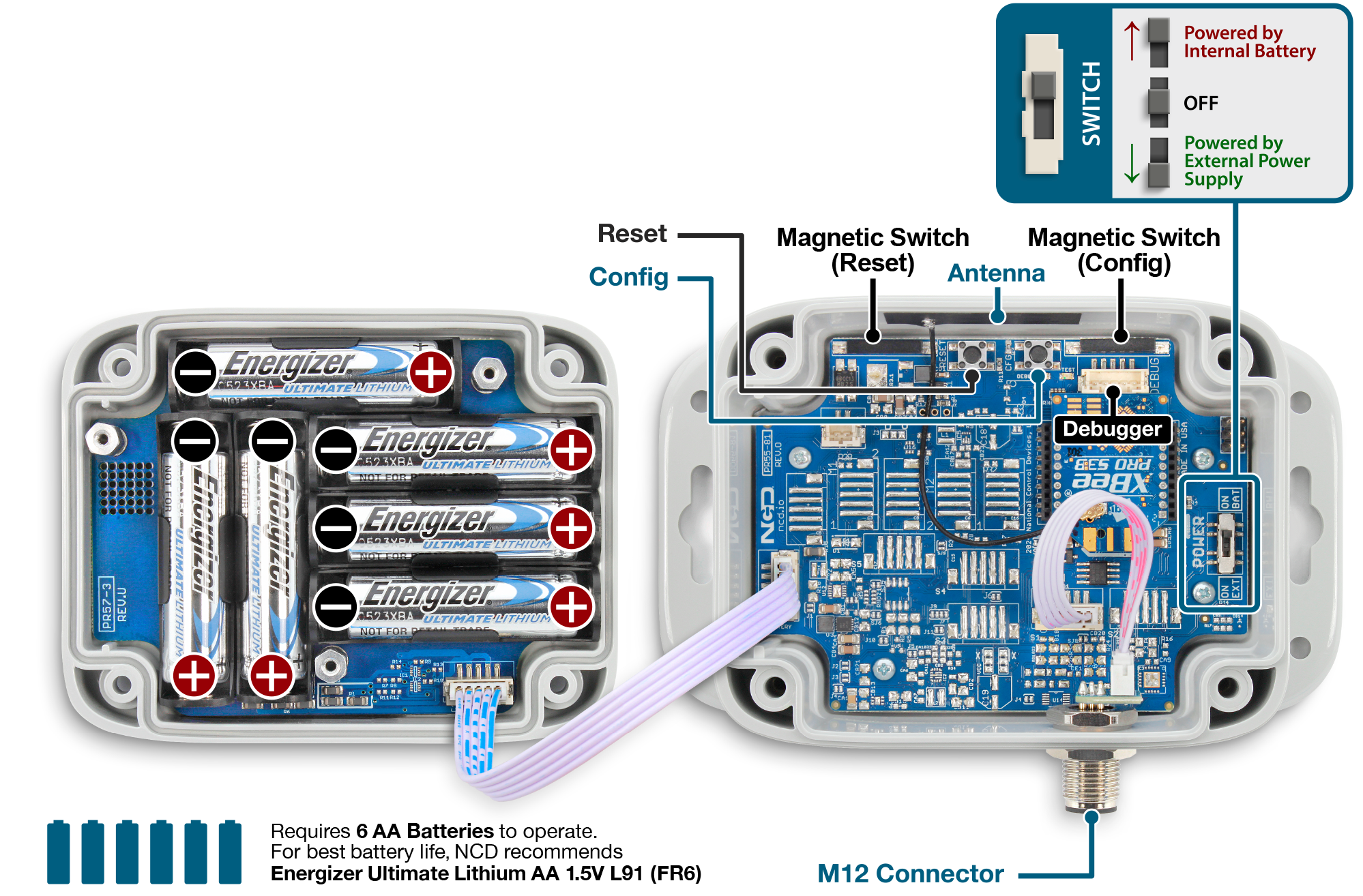
- Power-Efficient Sleep Mode, Up to 10 Year Battery Life
- User Configurable Sleep duration
- Includes Battery Level with Every Transmission
- Validates and Retries Lost Communication Packets
Wireless Technology
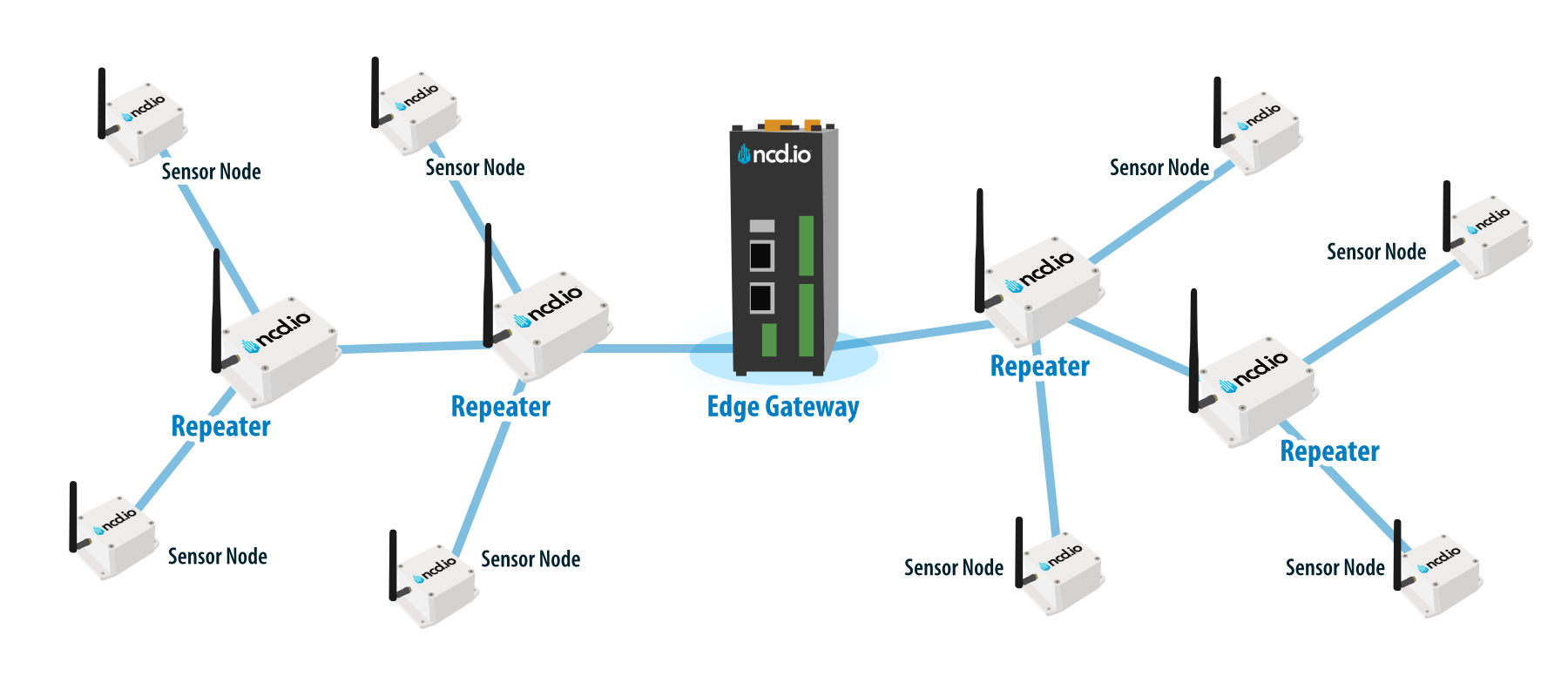
The NCD Industrial range of sensors utilizes DigiMesh, a proprietary networking technology designed by Digi® International. It is especially suitable for IIoT applications as it provides a number of benefits over conventional wireless stacks:
- Long range – up to 1200 feet in urban environments and 2 miles+ in open areas with the included antennas
- Mesh networking topology – no single point of failure, self healing network with high redundancy.
- Long battery life due to low power consumption – up to 10 years
- Simplified provisioning – extending the mesh network via repeater at no additional configuration complexity
- Works in the 868MHz, 900MHz and 2.4GHz bands – worldwide region interoperability.
If you want to learn more about DigiMesh and how it compares with another popular IoT stack (LoRaWAN) head to the article below:
IoT Wireless Sensor Networks: Digi®Mesh vs LoRaWAN®
Battery Life
| Specifications | Minimum | Nominal | Maximum | Notes |
|---|---|---|---|---|
| Batteries | 2 | 4 | 4 | May be Powered by 2 or 4 AA Batteries |
| Battery Life 6 TPD (TPD Transmissions per Day) | 8 Years | Battery estimation is based on a 30 min interval | ||
| Battery Life 12 TPD (TPD Transmissions per Day) | 5 Years | Battery estimation is based on a 30 min interval | ||
| Battery Life 24 TPD (TPD Transmissions per Day) | 3 Year | Battery estimation is based on a 30 min interval |
The Truth About Battery Life
Under the best of circumstances, the best non-rechargeable batteries commonly available today are limited to a 10 year non-working shelf life in a room temperature environment. Factors such as actual usage, temperature, and humidity will impact the working life. Be wary of any battery claims in excess of 10 years, as this would only apply to the most exotic and expensive batteries that are not commonly available. Also note that most battery chemistries are not rated for use in extreme temperatures. NCD only uses the best Non-Rechargeable Lithium batteries available today, which are also rated for use in extreme temperatures and have been tested by our customers in light radioactive environments. Lithium batteries offer a 10 year maximum expected shelf life due to limitations of battery technology. NCD will never rate sensor life beyond the rated shelf life of the best batteries available today, which is currently 10 years.
Applications & Use-cases
This advanced sensor measures temperature, humidity, pressure, air quality (IAQ), volatile organic compounds (VOC), and CO2 equivalent levels, making it an ideal solution for industrial, chemical, and explosive risk environments.
C1D2 Hazardous Environment Air Quality Sensor Applications
Hazardous Location Ventilation Effectiveness Monitoring
Class I, Division 2 areas often rely on ventilation to keep vapors from building up during normal operations and short maintenance events. This sensor can help trend VOC, IAQ, and CO2e alongside temperature, humidity, and pressure so teams can verify airflow performance, spot “stale air” conditions early, and document safer working conditions in C1D2 Group A–D spaces.
Oil & Gas Pump Rooms and Tank Farms (VOC Trend Monitoring)
Pump rooms, valve manifolds, and tank farm enclosures can experience intermittent vapor presence from seals, fittings, and transfer activity—even if systems are normally closed. This sensor can help track VOC and IAQ changes over time and trigger alerts when readings drift from baseline, giving operators a practical early warning to inspect equipment and ventilation before small issues become larger events.
Paint, Coatings, and Solvent Handling Areas (C1D2-Compatible IAQ Trending)
Mixing rooms, staging areas, and cleaning stations can see VOC spikes during handling, open-container tasks, and cleanup—exactly the kind of intermittent exposure common in Division 2 locations. This sensor can help capture those VOC/IAQ trends wirelessly (without running new wiring through hazardous zones) and support safer workflows by showing when the area returns to a normal baseline.
Chemical Storage and Transfer Rooms (Environmental Correlation + Safety Documentation)
Chemical storage rooms and transfer stations can have changing conditions that influence vapor behavior—temperature swings, humidity shifts, and pressure changes from ventilation cycles. This sensor can help correlate VOC/IAQ trends with temperature, humidity, and barometric pressure so EHS and maintenance teams can identify patterns, validate corrective actions, and maintain clearer documentation for hazardous-area operations.
C1D2 Hazardous Environment Air Quality Sensor Use-cases
Factory C1D2 Ventilation Verification and Exposure Trending
In a Class I, Division 2 manufacturing or chemical facility, the hazardous-rated air quality sensor can be installed in solvent-handling or process-adjacent areas to continuously trend VOC, IAQ, and CO2e. This data can be used to validate that ventilation is keeping air conditions stable during normal operations, to alert managers when readings drift from baseline, and to create a historical record that supports EHS reviews and safety audits in classified spaces.
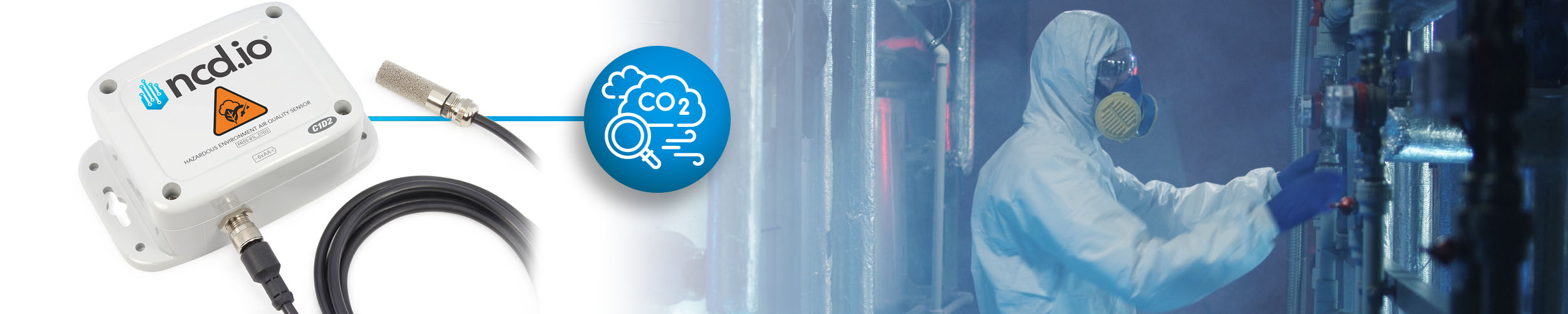
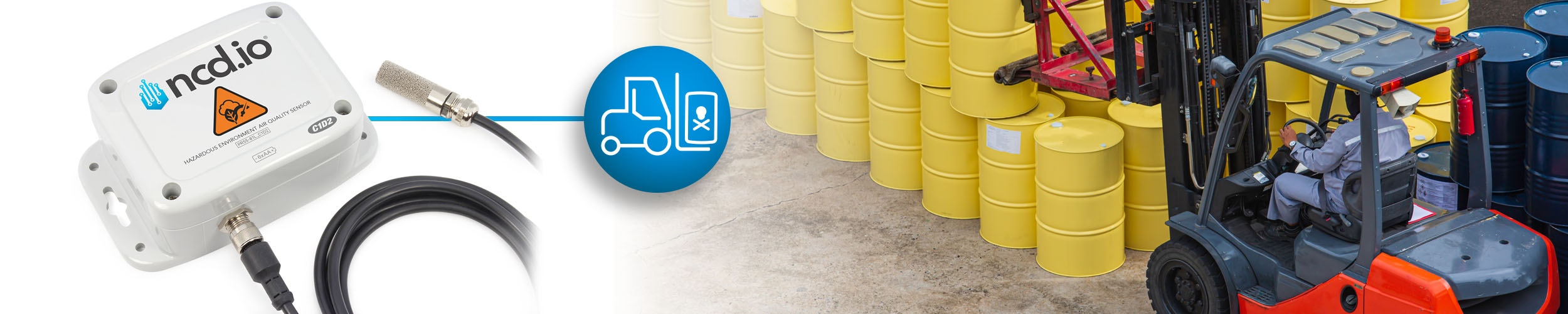
Loading Rack Transfer Event Monitoring
At a fuel or chemical loading rack (C1D2), the sensor can be placed near the transfer area to trend VOC and IAQ during loading and unloading operations. This data can be used to flag abnormal VOC persistence after a transfer is complete (suggesting a leak, poor seal, or procedural issue), to trigger notifications for immediate inspection, and to document “normal vs. abnormal” conditions across shifts and operators.
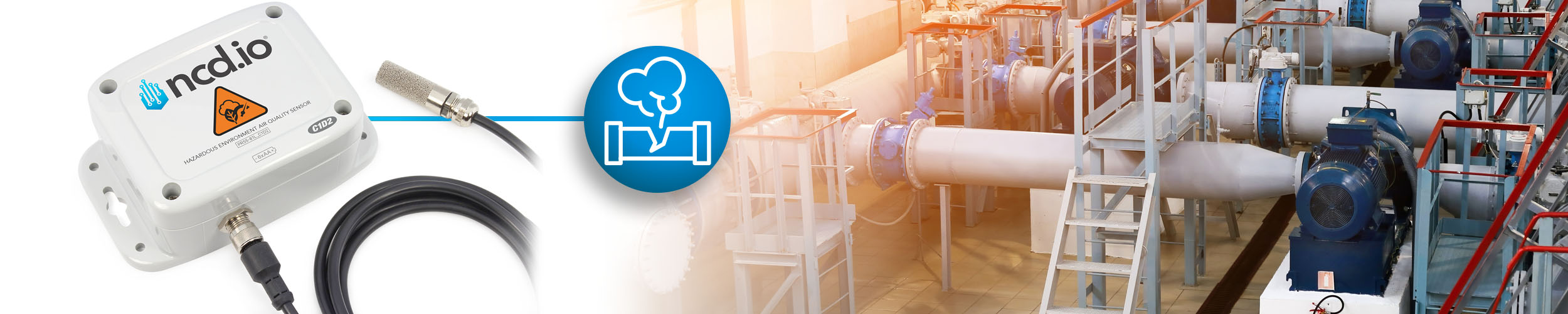
Pump Room Seal Degradation Early Warning
In an oil & gas pump room or compressor enclosure rated for Class I, Division 2, the sensor can be mounted near pumps, valves, or manifolds to monitor VOC/IAQ trends over weeks and months. This data can be used to detect gradual baseline changes that often occur as seals, gaskets, or fittings wear, enabling proactive maintenance before the issue escalates, while also correlating events with temperature, humidity, and pressure changes that influence vapor behavior.
Paint Mixing and Solvent Cleaning Workflow Control
In a paint or coatings facility operating in a hazardous (C1D2) mixing or cleaning zone, the sensor can be used to monitor VOC spikes during open-container mixing, thinning, and equipment cleaning. This data can be used to confirm that the area returns to a safe baseline before the next task or shift change, to alert supervisors when ventilation recovery is slower than expected, and to build objective evidence that supports safer procedures and worker protection in classified areas.