

Vibration finds the fault. Current draw is the number a planner will act on.
A vibration alarm on a motor starts a conversation. The reliability tech sees RMS velocity up 30 percent over a month and knows something is wearing. The planner sees a number in mm/s, a production schedule that is already full, and a machine that still sounds fine.
Current draw changes that conversation. Amps are a unit everyone in the building already understands, and a motor working harder than it did last month is something you can put a dollar figure on.
Start here
For the overview of all three signals (vibration, temperature and current) and how they fit together, start with Top 3 Motor Failure Detection Sensors.
What current is actually measuring
A motor draws the current it needs to hold speed against whatever is on the other end of the shaft. When that load gets heavier, current goes up. When the load goes away, current drops toward what the motor pulls spinning free.
So a current trend is a trend of mechanical load. You are reading what the driven equipment is asking of the motor, minute by minute, without anything touching the moving parts. A split-core current transformer clamps around one leg of the motor feed, and the wiring stays as it is.

Two things make that useful for maintenance. Current follows load directly, and it moves in both directions. A rise and a drop mean different things, and both are worth an alarm.
Faults current shows clearly
Current drops
A slipping or broken belt
The motor suddenly has less to turn, so current drops. Vibration may barely change, because the motor itself is fine. A sharp drop on a belt-driven fan or conveyor is one of the cleanest alarms you can set.
Current drops
A centrifugal pump losing prime
With no liquid to move, the impeller spins in air and current falls well below its normal running level. Vibration often reads it as noise or cavitation. Current says plainly that the pump is running dry, which is the fault that ruins seals fastest. The sensor sends current with each scheduled reading (every 30 minutes, for example), so the drop shows up on the next one. Where minutes matter, a pressure sensor on the discharge line gives you a second signal: discharge pressure and current falling together confirm the pump has lost prime.
Current rises
A blockage on a positive-displacement pump or a conveyor
Here the load climbs, and so does current, as the motor fights it. This is the opposite direction from the centrifugal pump, which is why it pays to know which kind of machine is on the other end of the shaft before you set a threshold.
Current rises
A binding gearbox or a dragging idler
Extra friction anywhere in the drivetrain makes the motor pull harder to hold speed. Current creeps up over days or weeks, often while the vibration spectrum still looks ordinary.
Current rises
A motor being asked for too much
Sustained current above the motor’s normal running level, with vibration steady, usually points to the process: a heavier product, or a machine running faster than it was sized for. That is a conversation with operations, and current is what starts it.
Why it gets the repair scheduled
RMS velocity is the number a reliability engineer trusts. It is also a number most people in the building have to take on faith.
Current is different. A motor pulling more current than it did in March, at the same voltage and doing the same job, is using more energy every hour it runs. The step from amps to kilowatt-hours to dollars per month is short enough to do in the meeting where the repair gets argued.
The strongest case puts the two side by side: the vibration trend that says something is wearing, and the current trend that says what it is costing. One shows the fault and the other shows why it should not wait for the next shutdown.
Setting it up on one motor
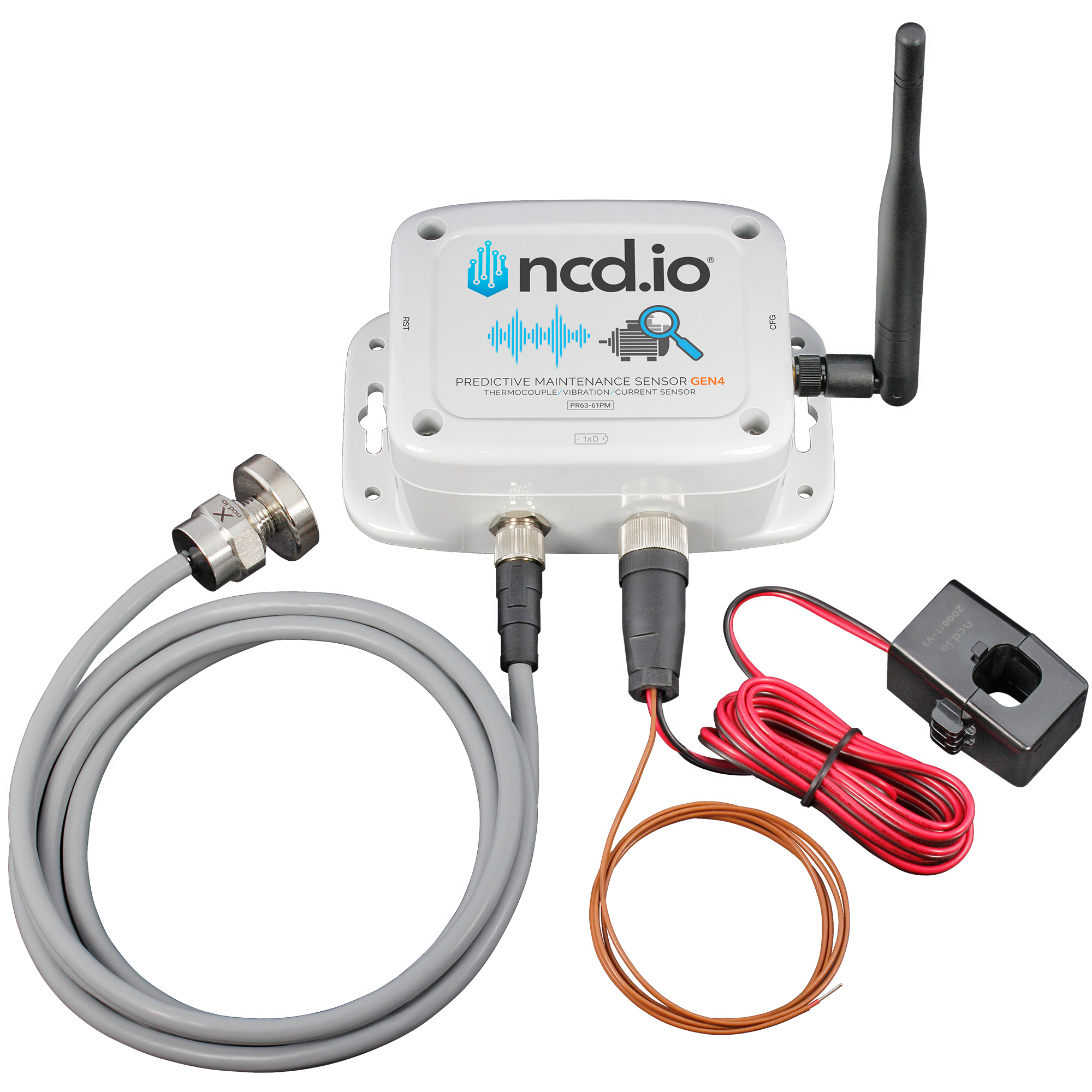
The sensor runs on a D-cell with Supercap for up to 5 years, so a trial needs no conduit. It joins the self-healing wireless mesh with up to 2 miles of line-of-sight range. Readings land on your Atrium gateway on your own network and forward from there to MQTT, Node-RED, AWS, Azure or whatever you already run.
Next steps
The sensor in this article
Gen4 Predictive Maintenance Sensor
Vibration with on-board FFT, a K-type thermocouple and AC current in one enclosure.
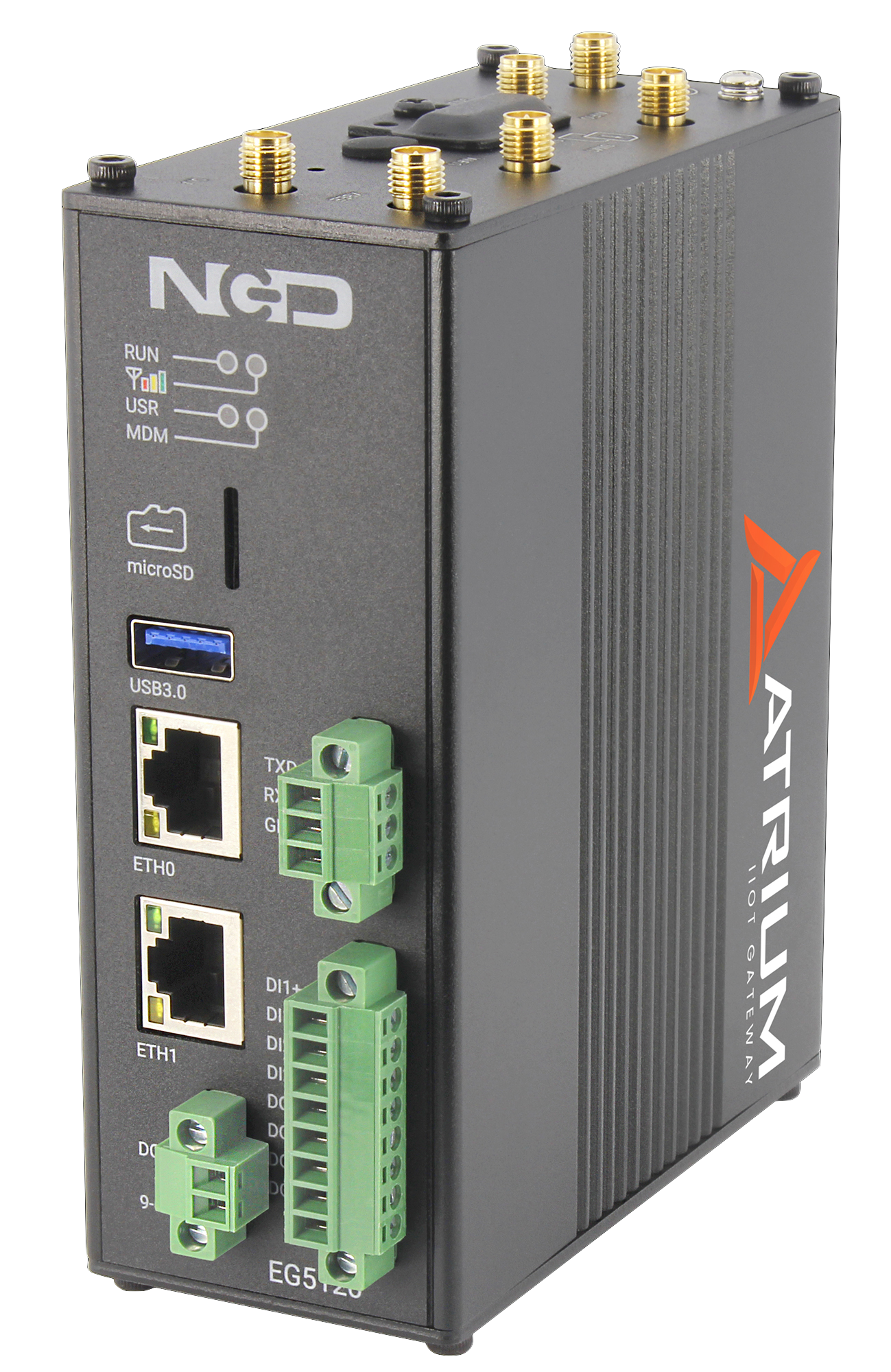
Where the readings land
Atrium IIoT Gateway
Keeps every reading on your own network and runs the high and low alarms.
For the vibration side in depth, read Predictive Maintenance With Vibration Sensors, the Complete Starter Guide.