Explore the Wireless Vibration, Ultrasound and Temperature Sensor Capabilities
Device Overview
Introducing NCD’s Wireless Vibration, Ultrasound and Temperature Sensor. Engineered for industrial predictive maintenance. They track 3-axis acceleration, vibration severity (RMS/Peak), temperature, and RPM. By capturing data up to 25.6kHz, they help detect mechanical faults (e.g., bearing wear, imbalance) before unexpected machine failures occur it also integrated ultrasound capabilities to capture high-frequency acoustic emissions.
This addition is critical because ultrasound detects the earliest stages of friction, lubrication starvation, and potential leaks long before detectable vibrations or temperature spikes occur. By combining both technologies, the sensor provides comprehensive visibility across the entire equipment degradation curve, allowing your team to identify and resolve anomalies weeks or months earlier than relying on vibration analysis alone.
Features:
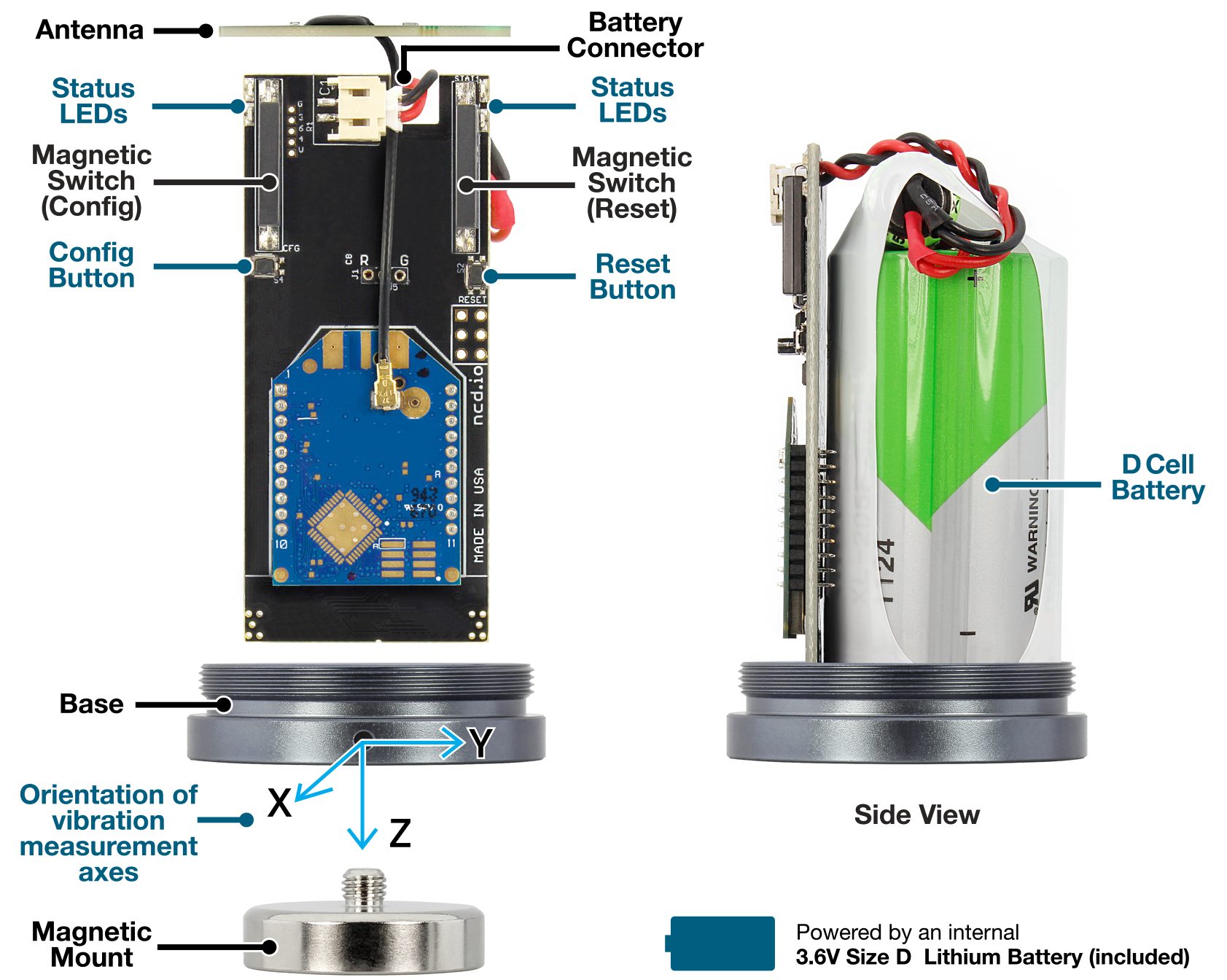
- It Helps to Detect: Misalignment, Looseness, Imbalance, Bearing wear, Gearbox wear, Lubrication.
- Senses Vibration, Ultrasound and Temperature.
- Analyzes On-Device: FFT, Time-Domain Data, Overall, RPM, Uptime.
- Always-Listening Mode: Stays on to capture machines that cycle on and off.
- Small & lightweight for ease of installation.
- IP67 rated sealed enclosure for dust &
moisture protection. - D-cell battery for long-lasting operation.
- A versatile user-configurable sample rate for slow or fast-running machines.
- In-Built Machine Learning optimizes power consumption.
- Asset On-Time Calculator automatically tracks operational status.
- Hardware Accelerator enhances vibration sampling accuracy.
- Configurable Sample Rate – 100Hz to 25.6KHz
- Available Wireless Transmission Frequencies – 900Mhz, 868Mhz, and 2.4Ghz
- Supports MESH networking via DigiMesh
- Fully open Node-RED library for configuration and data ingestion
- No Monthly Cost.
- Total Data Owner Ship.
Frequently Asked Questions About Wireless Ultrasound & Vibration Continuous Monitoring
What does the integrated ultrasound feature detect in condition monitoring?
Ultrasound detects high-frequency acoustic energy generated by friction, turbulence, and micro-impacts. By tracking specific acoustic metrics like Ultrasonic RMS (dBuV), Peak-to-Peak (dBuV), and Crest Factor, the sensor is highly sensitive to early-stage lubrication breakdown and minor mechanical faults. This allows teams to identify friction anomalies long before traditional vibration data or ambient temperature readings register a change.
Why combine ultrasound, 3-axis vibration, and temperature monitoring in one device?
Ultrasound catches the earliest acoustic signals of equipment wear, while comprehensive vibration data confirms the physical progression and severity of the fault. The sensor processes and transmits highly detailed, 3-axis time-domain metrics—including acceleration (RMS/Max G), velocity (mm/sec), displacement (mm), and up to three specific peak frequencies (Hz) per axis—alongside RPM and temperature. By combining raw ultrasound data with these processed mechanical metrics, it eliminates the ambiguity of relying on a single technology, providing a complete, multi-layered picture of asset health.
Why is continuous, wireless monitoring critical for predictive maintenance programs?
Mechanical faults develop on their own unpredictable timelines, not on scheduled inspection routes; manual snapshots frequently miss critical degradation that occurs between visits. Continuous wireless monitoring provides constant oversight, but doing so with large datasets requires robust transmission integrity.
Wireless Technology
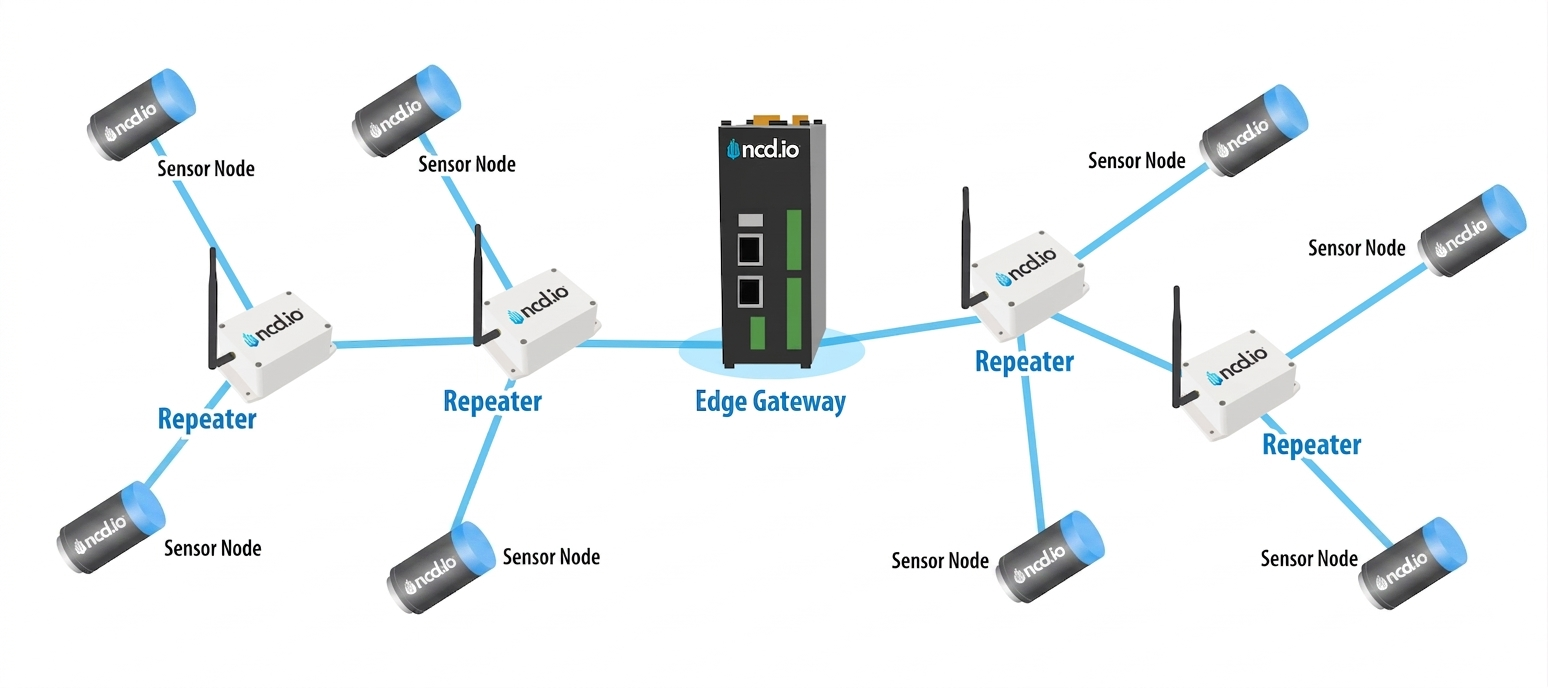
The NCD Industrial range of sensors utilizes DigiMesh, a proprietary networking technology designed by Digi® International. It is especially suitable for IIoT applications as it provides a number of benefits over conventional wireless stacks:
- Long range – up to 1000 feet in urban environments and 2 miles+ in open areas with the included antennas
- Mesh networking topology – no single point of failure, self healing network with high redundancy.
- Long battery life due to low power consumption – up to 10 years
- Simplified provisioning – extending the mesh network via repeater at no additional configuration complexity
- Works in the 868MHz, 900MHz and 2.4GHz bands – worldwide region interoperability.
Battery Life
| Specifications | Minimum | Nominal | Maximum | Notes |
|---|---|---|---|---|
| Batteries size | 16000mAh | This device has a single D-Cell (LR20) battery | ||
| Battery Life 1 TPD | 10 Years | TPD Transmissions per Day | ||
| Battery Life 12 TPD | 8 Years | TPD Transmissions per Day | ||
| Battery Life 24 TPD | 5 Year | TPD Transmissions per Day | ||
| Battery Life 96 TPD | 3 Year | TPD Transmissions per Day |
The Truth About Battery Life
Under the best of circumstances, the best non-rechargeable batteries commonly available today are limited to a 10 year non-working shelf life in a room temperature environment. Factors such as actual usage, temperature, and humidity will impact the working life. Be wary of any battery claims in excess of 10 years, as this would only apply to the most exotic and expensive batteries that are not commonly available. Also note that most battery chemistries are not rated for use in extreme temperatures. NCD only uses the best Non-Rechargeable Lithium batteries available today, which are also rated for use in extreme temperatures and have been tested by our customers in light radioactive environments. Lithium batteries offer a 10 year maximum expected shelf life due to limitations of battery technology. NCD will never rate sensor life beyond the rated shelf life of the best batteries available today, which is currently 10 years.
Applications & Use-cases
This advanced industrial sensor monitors vibration, frequency, RPM, and temperature, augmented by integrated ultrasound capabilities. By capturing early-stage acoustic emissions alongside standard mechanical metrics, it delivers the comprehensive data required for high-precision predictive maintenance and real-time equipment monitoring. This multi-layered approach allows industrial teams to intercept micro-faults and lubrication issues weeks before they escalate, maximizing machinery uptime and driving overall operational efficiency.
Wireless Vibration, Ultrasound and Temperature Sensor Applications
Acoustic Lubrication Optimization
Over-lubrication causes bearing blowout and overheating, while under-lubrication causes rapid wear. Route-based manual greasing is essentially guesswork. By monitoring the Ultrasonic RMS (dBuV) and Crest Factor, the sensor can dictate exactly when a bearing needs grease and, crucially, when to stop. As grease is applied to a dry bearing, the acoustic friction drops instantly. If the acoustic levels begin to rise again during application, it indicates over-lubrication. Pushing this raw acoustic data to an enterprise dashboard allows maintenance teams to transition from calendar-based greasing to condition-based acoustic lubrication, drastically extending asset life.
Early-Stage Pump Cavitation Detection
Cavitation (the formation and collapse of vapor bubbles inside a pump) destroys impellers. Standard vibration sensors only detect cavitation once the structural shaking becomes severe. The implosion of cavitation bubbles generates massive amounts of high-frequency acoustic energy. The ultrasound sensor will register a severe spike in Ultrasonic Peak-to-Peak (dBuV) the moment microscopic cavitation begins, long before the X/Y/Z velocity or displacement metrics show operational stress. This immediate acoustic alert allows automated systems to adjust flow rates or shut down the pump before physical pitting occurs on the impeller.
Advanced Predictive Maintenance for Rotating Equipment
Designed for critical rotating machinery—including motors, pumps, compressors, and turbines—this sensor seamlessly integrates into industrial predictive maintenance programs. By combining continuous vibration, frequency, and temperature tracking with high-frequency ultrasound detection, it captures the earliest indicators of friction and lubrication starvation alongside traditional faults like misalignment, imbalance, and bearing wear. This comprehensive, multi-sensor approach delivers actionable health insights, allowing teams to precisely schedule maintenance before asset health degrades, significantly reducing unexpected downtime and extending machinery lifespan.
Wireless Vibration, Ultrasound and Temperature Sensor Use-cases
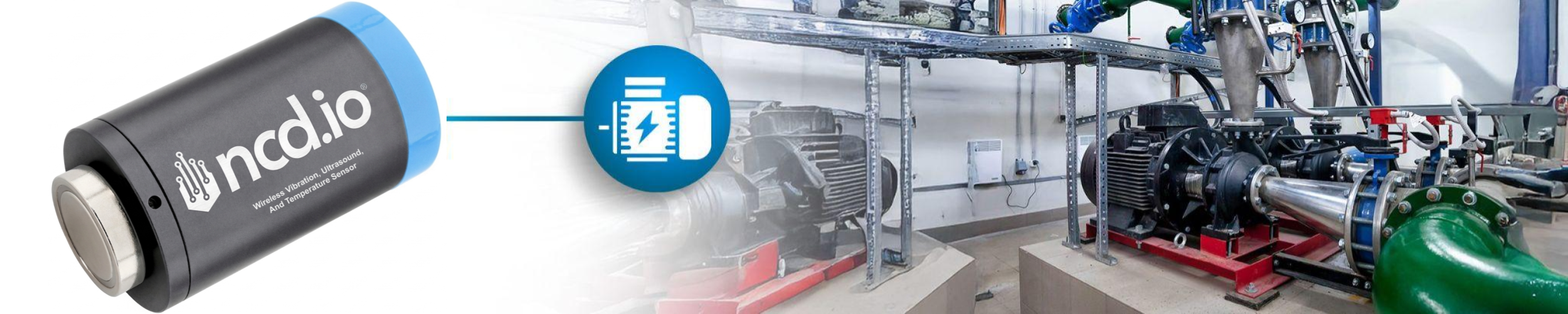
Industrial Pumps Monitoring
In a large-scale manufacturing plant, industrial pumps play a critical role in circulating cooling fluids and transferring raw materials. To ensure continuous operation, vibration sensors are installed on pump motors to monitor their performance in real-time. These sensors track vibration patterns and detect early signs of issues such as bearing wear, shaft misalignment, or pump cavitation.
When abnormal patterns are identified, the system automatically sends alerts to the maintenance team, allowing them to schedule repairs before a breakdown occurs. This predictive approach prevents costly downtime, reduces maintenance expenses, and extends the lifespan of the equipment. Additionally, the collected vibration data is analyzed over time to identify trends, helping the plant optimize maintenance schedules and improve overall system reliability.
Steam Trap and Internal Valve Leak Detection
Installed adjacent to critical valves and steam traps in energy-intensive industrial systems, the sensors continuously track ultrasonic frequencies and temperature variations to detect internal bypassing. By listening for the distinct high-frequency acoustic signature of pressurized gas or fluid escaping through a closed seal, the sensor identifies invisible internal leaks that otherwise produce no external vibration. When a leak is confirmed by a simultaneous spike in acoustic noise and temperature, the system immediately alerts the maintenance team to replace or repair the faulty valve. This proactive intervention reduces massive energy waste, prevents hazardous pressure build-ups, and ensures the facility meets its overall efficiency and safety goals.
Air Compressor Motor Monitoring
Installed on the motors powering air compressors, the vibration sensors continuously track motor performance to detect issues such as bearing wear, rotor imbalance, or misalignment. When abnormal vibration patterns are identified, the system automatically triggers alerts to the maintenance team, allowing them to address potential failures before they disrupt operations. This proactive approach ensures a steady supply of compressed air, which is vital for powering pneumatic tools and automated machinery, thereby minimizing downtime, reducing repair costs, and maintaining peak production efficiency.
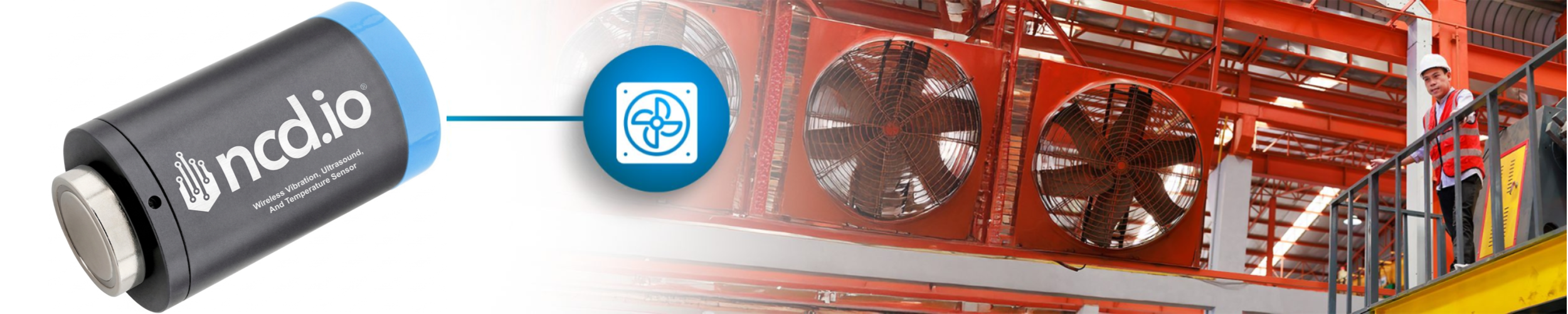
Industrial Fan and Blower Performance Monitoring
In a large-scale industrial facility, the sensor is used to monitor the vibration of high-capacity fans, blowers, and ventilation systems. By detecting early indicators of imbalance, misalignment, or bearing failure, the sensor allows maintenance teams to intervene before minor issues escalate into major problems. Ensuring the optimal performance of these systems is crucial for maintaining air quality, temperature control, and overall operational efficiency in the facility, preventing costly downtime and ensuring regulatory compliance.